

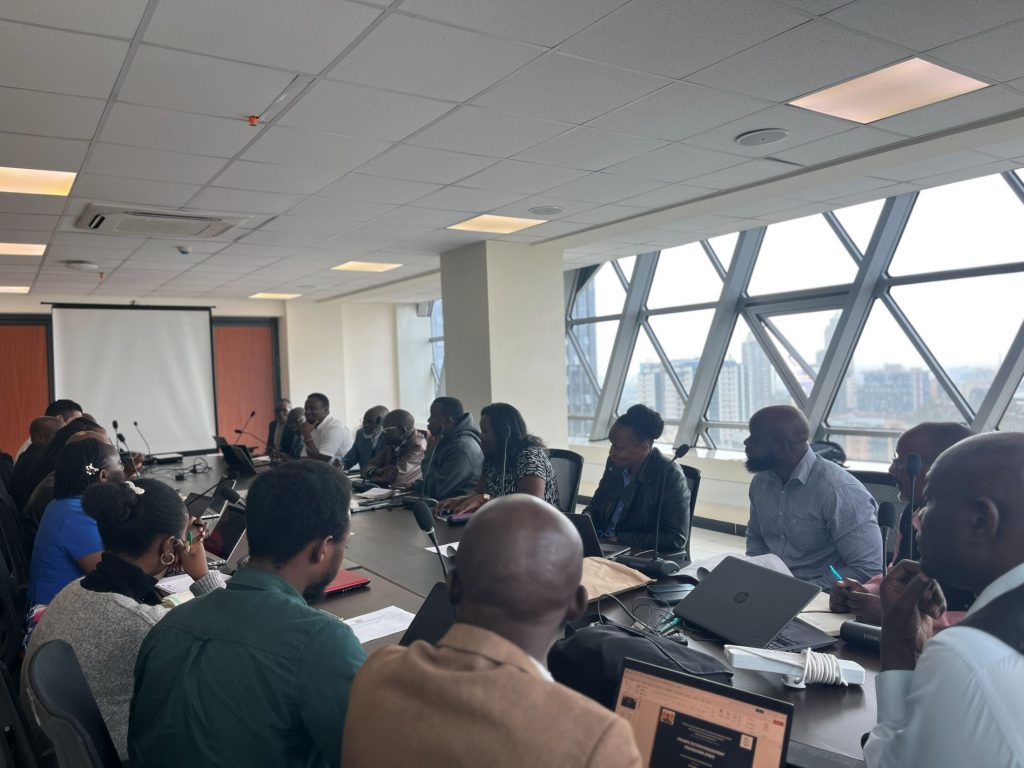
A kick off meeting held today at Prism towers 15th Floor, to on board Geodev Ltd.
The Government of Kenya, through the State Department for Housing and Urban Development (SDHUD), is implementing the Second Kenya Urban Support Program (KUSP 2). This initiative builds upon the successes of KUSP 1 (2017–2023) to strengthen urban institutions, enhance infrastructure, and boost service delivery across 45 counties and 79 municipalities, including two refugee-hosting municipalities in Turkana and Garissa. The overarching program is scheduled to run until June 30, 2028.
To fulfill Result Area 1 (Strengthened Institutions for Urban Service Delivery) and Result Area 4 (Enhanced Private Sector Engagement), the State Department for Housing and Urban Development (SDHUD) supported development of a Private Sector Engagement Framework (PSEF) and Toolkit (PSEF) which have been validated and adopted by counties and municipalities. Geodev Ltd was contracted to support the rollout of the PSEF across the 45 counties and 79 municipalities that are implementing KUSP II.
OBJECTIVE OF THE ASSIGNMENT
The primary objective for GeoDev is to accelerate the uptake and implementation of the PSEF and its governance tools across all 79 municipalities and 45 counties. GeoDev is required to maintain a strong, visible, and continuous ground presence to anchor the framework locally. A key requirement of the assignment is establishing sustainable structures that guarantee program continuity within the municipalities well after the consultant’s exit.
SPECIFIC TASKS AND SCOPE OF WORK
GeoDev will execute the assignment under six defined core pillars:
Dissemination and Contextualization: Roll out a comprehensive dissemination strategy to equip counties and municipalities with the capacity to institutionalize and operationalize the PSEF alongside its respective governance tools.
Operationalization and Institutionalization: To embed the PSEF into county and municipal planning and budgeting cycles, the consultant will provide targeted support focused on practical integration and measurable outcomes. This includes supporting counties and municipalities to develop and maintain a comprehensive local private sector database to inform strategic decision-making.
Governance and Citizen Forums: Support municipalities in establishing and strengthening Citizen Forums in strict compliance with the Urban Areas and Cities Act (UACA). These forums will act as structured channels for regular dialogue between local authorities, citizens, and private sector partners to promote inclusive urban governance.
Capacity Building and Knowledge Transfer: Design and execute a Training-of-Trainers (ToT) program for municipal boards and technical staff to ensure long-term institutional memory. Deliver targeted capacity-building workshops, specifically incorporating digital literacy modules tailored to local governance stakeholders.
Digital Tools and Innovation: Deploy user-friendly digital platforms to streamline stakeholder engagement and optimize field data collection. Drive digital literacy among officials and forum members to enable active virtual participation while introducing innovative, localized methodologies for Public-Private Partnerships (PPPs) and private sector collaborations.
Risk Mitigation and Sustainability: Conduct detailed risk analyses and design localized risk management frameworks. Create robust stakeholder engagement plans, map out and resolve institutional capacity gaps, and seamlessly weave sustainability indicators into all project interventions.
IMPLEMENTATION TIMELINE AND CORE DIRECTIVES
Effective Date: November 4, 2026 (Commencing today after the kick off meeting ).
Duration: Exactly one (1) calendar year from the effective date.
Ground Presence Directive: The Ministry emphasized that the consultant’s presence must be actively seen and felt on the ground across all target counties, including specialized focus areas like the refugee-hosting municipalities in Turkana and Garissa.